mardi 24 novembre 2015

Photo
MIAMI — “Everybody’s always looking for the next art neighborhood,” mused Tony Cho, standing amid the scrum outside Gallery Diet. Taking in the scene at its opening night party here, he motioned to another new gallery across the street, its neon sign punctuating an otherwise darkened stretch of this city’s Little Haiti neighborhood. “It’s going to happen here.”
All the key art world participants were present: affluent collectors, museum curators, local artists and not least, investors like Mr. Cho, chief executive of Metro 1 Properties in Miami and a figure associated with the art-linked real estate surge in the once-industrial Wynwood neighborhood, 30 blocks south.
Signs of Little Haiti’s impending transformation are everywhere. Gallery Diet is one of nearly a dozen art galleries that have relocated fromWynwood to Little Haiti and its adjoining Little River area, including the Michael Jon Gallery (one of only two Miami dealers selected for the annualArt Basel Miami Beach fair in December), as well as the local stalwarts Emerson Dorsch, Pan American Art Projects and Spinello Projects. Some of Miami’s best-known artists have already made the same move, seeking affordable studios, homes or both. Adding a further social element, Wynwood coffeehouse, bar and restaurant owners are also preparing to open spaces in the predominantly working-class Little Haiti.
Continue reading the main story
FLORIDA
95

BISCAYNE BLVD.
Miami
Beach
NE. 71ST ST.
‘Little Haiti’
195
WYNWOOD
Miami
1
2 MILES
There is a novel twist to this exodus from Wynwood, however. Many art world denizens are buying their buildings instead of renting them, despite the attraction of Little Haiti and Little River rents that top out at $15 a square foot. Artists and gallery owners are drawing on the painful lessons of the past decade’s explosive growth, when many were priced out of the once-cheap industrial zones in Wynwood that had been the area art scene’s center.
The game-changing nature of this shift — a break from the traditional rootlessness of the bohemian art class — is not lost on Nina Johnson-Milewski, director of Gallery Diet. When Mr. Cho warmly clasped her shoulder and teased: “Congratulations! You’re a developer now,” Ms. Johnson-Milewski looked slightly taken aback. She wryly corrected him: “I’m a micro-developer.”
Labels aside, Ms. Johnson-Milewski said she realized what’s truly at stake: control. “It’s not just about avoiding having your rent jacked up,” she explained. “Ownership symbolizes independence, and for those of us who produce culture, longevity.”
Photo
The artist Randy Burman at an opening party for "100+ Degrees in the Shade," a survey of art from south Florida. CreditRyan Stone for The New York Times
Longevity can be a novel concept in a city like Miami. The 2002 arrival of Art Basel Miami Beach transformed the area, once derided as a cultural backwater, into a feverishly developing destination for art. Scores of galleries sprang to life in Wynwood, helping to create an American art mecca, behind only Los Angeles and New York.
Wynwood pioneers moved into a down-on-its-heels warehouse district and invested their sweat equity, only to find themselves priced out of the neighborhood they helped make so attractive. Wynwood rents fetch upward of $60 a square foot, triple that of just four years ago; spacious warehouses can command $100,000 rental fees during Art Basel for corporate product introductions and media events. Art may remain part of the marketing of Wynwood, used to sell everything from cocktails to condos. But almost all the galleries that put it on the cultural map are gone.
Buying property in a new neighborhood instead of renting may not exactly smack of storming the barricades, but it is increasingly deemed the only way for art workers to break a vicious cycle of art-powered gentrification.
Photo
Nina Johnson-Milewski, director of Gallery Diet, which recently moved from the Wynwood neighborhood of Miami to the Little Haiti neighborhood. CreditRyan Stone for The New York Times
“When our openings started filling with 17-year-olds looking to get drunk, I knew it meant collectors weren’t going to come to Wynwood anymore,” said Karla Ferguson, director of the Yeelen Gallery.
A move to Little Haiti beckoned as her husband, Jerome Soimaud, already spent his days painting finely detailed portraits of the area’s residents. Among the few who owned their Wynwood galleries, the couple said they sold their property for $323,000 and went from 1,100 square feet to 13,000 square feet.
Emerson Dorsch was another of the rare winners in Wynwood who bought its building — a onetime crack house purchased for $120,000 and turned into a vital focal point for emerging talent. This year, the gallery’s directors, Brook Dorsch and Tyler Emerson-Dorsch, his wife, sold their nearly 13,000-square-foot property for $3.05 million, with talk of a Manhattan restaurateur moving in. They promptly sank a good chunk of their windfall into a new Little Haiti space set to open next spring.
Photo
An installation at the Yeelen Gallery. CreditRyan Stone for The New York Times
“Little Haiti makes me hopeful that there’s still a few places where small-business owners can exist,” Ms. Emerson-Dorsch said.
Little Haiti is hardly an empty vessel awaiting Wynwood’s refugees. Although Haitians are no long the predominant residents of Little Haiti, as they were during the 1980s when thousands fled the notorious Jean-Claude Duvalier regime, the neighborhood retains a strong emotional hold among the island’s diaspora in South Florida. Religious festivals and Haitian roots music concerts draw hundreds from all across Miami. Yet akin to the recent efforts of New York developers to rechristen part of the often-stigmatized South Bronx as the more market-friendly “piano district,” several of Little Haiti’s larger real estate players are adamantly referring to their holdings as part of Little River, or as Lemon City, the area’s largely forgotten name dating to the late-19th century.
Carl Juste, a founder of the Iris PhotoCollective, in Little Haiti, and a Pulitzer Prize-winning photographer for The Miami Herald, finds the renaming ludicrous. “If you walk down Northeast Second Avenue,” he said, referring to the neighborhood’s main commercial strip, “you can hear Haitian music and smell griot,” a signature Haitian pork dish. “When was the last time you walked down Northeast Second Avenue and saw someone trying to sell you lemons?”
Photo
An outdoor space showcases artwork at Gallery Diet in Miami, which recently moved to the Little Haiti neighborhood. CreditRyan Stone for The New York Times
For the painter Edouard Duval-Carrié, who bought a home and studio in Little Haiti, the key to both the survival of a vibrant Haitian culture and a healthy local art scene remains property ownership. Mr. Duval-Carrié ticked off a dozen nearby studio inhabitants originally from Argentina and Colombia right alongside those from Port-au-Prince. But he worries that too many are still renters and easily pushed out. With speculators snapping up prime parcels, he wonders, is it already too late for a critical mass of property-owning artists to cement themselves into Little Haiti?
To that end, Mr. Duval-Carrié hopes the nonprofit ArtCenter South Florida, which runs a complex of subsidized artist studios on Miami Beach — and where he first landed upon arriving in Miami in 1992 — will relocate to Little Haiti, acting as a tipping point to guarantee that artists permanently remain part of the neighborhood fabric.
ArtCenter bought one of its properties in 1988 for $684,000 and recently sold it for $88 million, giving it the comfort of an endowment larger than any other museum or visual arts organization in South Florida. It has opened a temporary exhibition space in Little River, but board members are split. One camp seeks to buy a new building in the Little Haiti area and repeat its model of providing artists with affordable studios, perhaps adding a residential component. The other faction is mulling breaking with its ownership ethos, instead managing a studio complex that the developer Moishe Mana is building in Wynwood, part of a project stretching across 24 acres and including shops and luxury condo towers.
It is a case of more money, more problems, said ArtCenter’s executive director María del Valle. “We need to do this right,” she said. “I’m not going to allow someone to make a return of 200 percent in one year off of the ArtCenter.”
Ms. del Valle has hopes that the constant jockeying between real estate agents and artists in Miami will work in art’s favor.
“I wish we could spend less time thinking about real estate,” she said with a sigh, “and more time thinking about art.”

lundi 23 novembre 2015

‘Photo-Poetics: An Anthology’ Features 10 Artists at the Guggenheim


Lisa Oppenheim’s “The Sun Is Always Setting Somewhere Else.”CreditLisa Oppenheim/Solomon R. Guggenheim Museum, New York
As photography disperses in an ever more granular way into daily life — through phones, social media, ubiquitous screens — artists are hauling the medium back into the studio to see if it can be reconstituted into something more tangible. Sara VanDerBeek once described how she created an object, captured its image and “then, through the process of making a final print, framing it and hanging it on the wall,” rendered the image “an object again.”

Ms. VanDerBeek is one of 10 artists in “Photo-Poetics: An Anthology,” an exhibition that tries to wrap its arms around the increasingly amorphous subject of photography’s future in art, at the Guggenheim Museum. Over 70 works are featured, by Leslie Hewitt, Elad Lassry, Ms. VanDerBeek and more. All are seeking, as the curators write, “an image imbued with poetic and evocative personal significance — a sort of displaced self-portraiture — that resonates with larger cultural and historical meanings.” (Through March 23, guggenheim.org.)

jeudi 19 novembre 2015

The future is round: why modern architecture turned doughnut-shaped

Whenever I draw a circle, I immediately want to step out of it,” Buckminster Fuller once said. Unfortunately, the public thought the same when the architect tried to flog them his circular houses. But if we’re not living in circles in the 21st-century, we’re increasingly finding ourselves working in them. The circle is emerging as a key modern form for office buildings and a way of organising people. Stepping out of them may no longer even be an option.

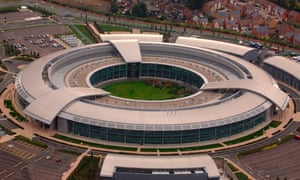
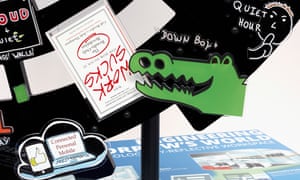
Three sculptures in a new show at the Serpentine Gallery bring this looping train of thought to mind. They’re not really sculptures, more architectural models of the headquarters of three institutions: the Government Communications Headquarters (GCHQ) in Cheltenham, funky online retailer Zappos in Las Vegas, and Apple’s new campus, currently under construction in California. Each model has been tipped on its side, to accentuate the fact they are all circular.
This is more than just a coincidence. The models are by Simon Denny, a New Zealand artist who tackles the culture, impact and jargon of new technology. Previously, he’s made works that honour the tech maverick Kim Dotcom and mock the garish graphics of the National Security Agency’s (NSA) internal communications, as revealed by the Snowden leaks.
GCHQ 1 by Simon Denny, 2015.FaceboTwitterPinterest
 GCHQ 1, 2015, by Simon Denny. Photograph: MMB - Modellbau Milde Berlin/Galerie Buchholz
Now, Denny is scrutinising how similar hacking culture is to “contemporary radical management practices”. Chief among them is “holacracy”, or rather, Holacracy® – a public idea that’s also a privately owned concept, which is about right for this strange new world.
For those not up on their radical management slang, Holacracy is a “complete system for self-organisation” that replaces traditional hierarchies with a supposedly more efficient system of autonomous teams of employees called “circles”. “More like a city and less like a top-down bureaucratic organisation,” is how Zappos chief Tony Hsieh put it earlier this year. (Though he’s still the boss, so it’s not entirely un-hierarchical.)
Pinterest
 GCHQ in Cheltenham, AKA ‘the Doughnut’. Photograph: Alamy
Zappos, now owned by Amazon, is the biggest company so far to adopt Holacracy. It abolished all job titles and managers in late 2014, just as it moved into its new HQ, formerly Las Vegas City Hall. Zappos is the epitome of the trendy tech startup made good. Its motto is “deliver WOW through service”. It talks of its workforce in terms of “community” and “family”. And its circular campus is like a management diagram writ large.
Over at Apple, it’s a similar story. Their new campus, designed by Norman Foster and due to finish next year, is an elevated, four-storey, minimalist ring, utterly of a piece with Apple’s sleek products. Apple has not explicitly adopted Holacracy, but its innovation-seeking methodology has much in common with it. “The concept of the building is collaboration and fluidity,” an Apple exec told local planners. “We wanted this to be a walkable building – that’s why we eventually settled on a circle.”
Against all expectations, GCHQ is also flirting with Holacracy. It even won a business award last year for “creating the right environment for innovation and collaboration” (even if the creators themselves could not be identified). Former hackers as well as government suits roam the curved corridors of “the Doughnut”, as GCHQ’s base is known. This is not unusual, shows Denny. Big organisations are increasingly adopting the techniques of hackers, such as “hackathons”, where employees are encouraged to be playful, creative, even subversive. “Today, commercial organisations and hacking groups deploy a mixture of top-down and bottom-up techniques: a tension designed to enable directed, effective activity and also maintain the messiness necessary for the next thing to emerge,” he says.
Top-down and grassroots, private and public, secrecy and transparency, democratic freedom and Orwellian control – Denny’s work warns us that the boundaries are no longer visible.
All of this might sound eerily familiar to readers of Dave Eggers’ 2013 novel The Circle. The story takes place at a fictional boundary pushing West Coast social media outfit – a walled garden of cutting-edge tech, employee benefits and great parties. But those high principles of “transparency” and “openness” start to get sinister, to the point where workers are endorsing Animal Farm-style slogans such as “privacy is theft” and “secrets are lies”. Eggers never really describes the architecture of The Circle, only hinting at “brushed steel and glass” and a vast, rambling campus where “the smallest detail had been carefully considered”.
 Zappos 1, 2015, by Simon Denny. Photograph: MMB - Modellbau Milde Berlin/Galerie Buchholz
Architecture has always reflected its creators’ power structures, though for most of western history it’s taken a more classical form. See Giuseppe Terragni’s rigorously ordered 1930s Casa Del Fascio, commissioned by Mussolini as the National Fascist Party headquarters – a perfect half-cube. Or Terry Farrell’s monolithic MI6 building in London (the one James Bond’s enemies seem to love blowing up). But Dutch architect Rem Koolhaas was one of the first to apply this new circular logic – to the HQ of CCTV, the Chinese state broadcaster. Rather than a skyscraper, he folded the building back in on itself to create a gigantic loop, in the name of operational efficiency.
That’s not to say that all circular buildings represent some emergent 21st-century order. It is interesting, though, that past precedents have usually been buildings designed for spectatorship: sports stadiums or, more resonantly, panopticon prisons, where inmates’ cells are arranged in a ring so they’re visible to guards in a central observation tower. Take away that tower and you have the Apple campus.
“Art does not reproduce the visible; rather, it makes visible,” Paul Klee once said. For many artists today, surveillance has become central to that mission. As well as Denny you could include those who are turning surveillance infrastructure against itself, such as Jill Magid, who co-opted Liverpool’s citywide CCTV network for her art, and James Coupe, whose video installation Swarm used surveillance algorithms to “profile” gallery visitors, then composite them into demographically similar groups. Or Mishka Henner, who creates aerial images of sites like US military bases using Google Earth.
 GCHQ 3 Agile/Holacracy Workspace, 2015, by Simon Denny. Photograph: Galerie Buchholz
But perhaps the leader in this field is Trevor Paglen, best known for his ultra-long-range pictures of “secret” US military sites (as featured in Laura Poitras’s Edward Snowden documentary Citizenfour). Paglen has also shot spy satellites in the night sky, projected absurd NSA and GCHQ codenames on public buildings, and photographed idyllic locations, including a deserted Long Island beach, that conceal major internet and surveillance infrastructure. “I try to learn how to change my own vision,” he says, “so that when I walk around every day, I can see the fact that this is happening – because these are often abstract things – then try to show people how to see them.”
Paglen also made a short film on a surveillance flight around GCHQ’s “Doughnut”, which played before Citizenfour in cinemas last year. Its name – what else? – is Circles.

mardi 17 novembre 2015

After Paris Attacks, ‘La Marseillaise’ Echoes Around the World in Solidarity


It rang out at the Metropolitan Opera, with Plácido Domingo conducting, and before performances by the Philadelphia Orchestra, the Lyric Opera of Chicago, the Detroit Symphony Orchestra and others. Muslim leaders sang it in Paris at the scene of one of Friday’s deadly terror attacks. London’s Wembley Stadium will display its lyrics on large screens to help English-speaking soccer fans muddle through it Tuesday when England plays France.
“La Marseillaise” has echoed around the world since Friday’s terrorist attacks — an expression of solidarity with the people of France and of outrage at the carnage caused by the terrorists who killed 129 people Friday during a series of coordinated attacks in Paris. But the ubiquity of the song, the French national anthem, reflects something else too: the way “La Marseillaise” resonates emotionally around the world in a way few other national anthems do.
What other anthem can boast of being quoted by the Beatles (in the introduction to “All You Need Is Love”), Tchaikovsky (“1812 Overture”) and Debussy (who used fragments in his “Feux d’artifice”)? Or of being covered by the jazz guitarist Django Reinhardt and the singer Serge Gainsbourg, who recorded a reggae adaptation? Or of anchoring emotional scenes in two masterpieces of world cinema: Jean Renoir’s “Grand Illusion” and, a few years later, “Casablanca,” in the unforgettable scene where the regulars at Rick’s Café Américain sing it as an act of defiance to drown out Nazis singing a German patriotic song?

Of course there were other songs taken up after the Paris attacks. Madonna paid tribute to the people of France, and Édith Piaf, by singing “La Vie en Rose” during a concert in Stockholm on Saturday. Coldplay, at a concert in Los Angeles on Saturday, paid its own tribute to the people of Paris by playing a cover of John Lennon’s “Imagine.”
But it is “La Marseillaise” that has provided much of the soundtrack since the attacks — from the French soccer fans who sang it as they were evacuated from the stadium to the mourners who gathered around the world, from the French Embassy in Dublin to Union Square in New York, where French students sang it.

And, since the attacks, the anthem has been played at sporting events around the world, including at N.B.A. games at Madison Square Garden, where the Knicks played the New Orleans Pelicans, and at the Staples Center in Los Angeles, where the Clippers played the Detroit Pistons, and at several N.H.L. games in Canada.
It is a rousing anthem but, as French speakers can attest, hardly a song of peace. Its most bloodthirsty verses — especially one calling for spilling the “impure blood” of enemies — have long attracted controversy. Over the years there have been calls by prominent French citizens, including, in 1992, by Danielle Mitterrand, who was then France’s first lady — to rewrite its most bellicose lyrics. But traditionalists won out, and the call to spill impure blood remains.
The song took a twisty path to becoming France’s national anthem. It was written in 1792 by Capt. Claude Joseph Rouget de Lisle to inspire French troops under siege by Prussian soldiers in Strasbourg, and it was originally called “The War Hymn of the Army of the Rhine.” It soon became an anthem of revolutionary France, and was given its current name after soldiers from Marseilles sang it on their marches. It fell in and out of favor in France during the 19th century, but was adopted by liberal and revolutionary movements elsewhere in Europe and around the world, and officially became the French national anthem in 1879.


vendredi 13 novembre 2015

Researchers Say There May Be Undiscovered Tomb at Great Pyramid of Giza


Researchers in Egypt using advanced scanning techniques to study the Pyramids said this week that they had detected “thermal anomalies” within the Great Pyramid of Giza that could indicate the presence of an undiscovered tomb. That is one possible explanation for striking differences in temperature that the multinational research team said it found between the stones at ground level on the eastern side of the 4,500-year-old structure, according to Egypt’s Ministry of Antiquities.

“The first row of the pyramid’s stones are all uniform, then we come here and find that there’s a difference in the formation,” Mamdouh el-Damaty, the Egyptian minister of antiquities, said to journalists on Monday,according to The Associated Press.

He said the team found “that there is something like a small passage in the ground that you can see, leading up to the pyramids ground, reaching an area with a different temperature. What will be behind it?”Continue reading the main story

The team also found thermal anomalies on three other pyramids in Giza and Dahshur, 12 miles south, but the ministry said in a statement that the temperature differences detected at the Great Pyramid were “particularly impressive.”

While the anomalies on the other pyramids ranged from 0.1 to 0.5 degrees, the team found that some stones on the Great Pyramid were six degrees warmer or cooler than the stones next to them.


“There is something here,” Hany Helal, a professor at Cairo University involved in the project, told CNN. “Something is not normal with respect to the other parts of the Pyramid.”

The Ministry of Antiquities said the temperature differences could be caused by the “presence of voids beneath the surface” or the movement of “internal air currents” beneath the stone blocks. It said the team’s findings would face further analysis in the coming weeks.

Mehdi Tayoubi, the president of the Heritage Innovation Preservation Institute, which is coordinating the project along with Cairo University,tweeted an image of a watercolor painting that he said showed the specific location on the Great Pyramid where the thermal anomaly was detected.


mardi 10 novembre 2015

The Big Bang of Art and Tech in New York


What happens when you put artists and technologists together? Forty-nine years ago last month, Robert Rauschenberg and a Bell Telephone Laboratories engineer named Billy Kluver answered that question with a tennis match.
The game pitted the tennis pro Mimi Kanarek against Frank Stella, already one of America’s most radical and celebrated painters. Surrounded by some 1,200 viewers on bleachers, the two strode into the drill hall of the 69th Regiment Armory in New York and faced off across the net. Each time one of them hit the ball, a miniature radio transmitter inside the racket broadcast a loud “bong” and sent a signal extinguishing one of the hall’s 48 overhead lights. When the vast space had gone completely dark, the match was over. But the performance continued: Without a word, several hundred people walked in and went through a sequence of motions in total darkness, invisible to the audience except on giant television screens displaying a ghostly infrared projection. With Kluver’s help, Rauschenberg had transformed a familiar sport into something vaguely threatening and more than a little disturbing.
Photo
The artist Frank Stella playing tennis in “Open Score” (1966). Credit Robert Rauschenberg Foundation/Licensed by VAGA, New York, NY
Rauschenberg’sOpen Score was part of “9 Evenings: Theater & Engineering,” a landmark series of performance-art pieces presented at the armory in October 1966. By pairing artists like John Cage and Lucinda Childs with engineers from Bell Labs, Rauschenberg and Kluver hoped to meld the “two cultures” C.P. Snow had described in his 1959 book of that title. Today their efforts are at the center of “Silicon City: Computer History Made in New York,” an exhibition at the New-York Historical Society that charts the area’s rise as a technology hub from the 19th century to the 1980s.
“Silicon City,” opening Friday, Nov. 13, begins with Samuel Morse’s telegraph and the many wonders that sprang from Thomas Edison’s New Jersey laboratories. In contrast to Silicon Valley (which was still largely made up of fruit orchards as late as the 1960s), such early inventions did not lead to wave after wave of entrepreneurial innovation. Instead they gave rise to vast, monopolistic or quasimonopolistic enterprises that helped define 20th-century America — chief among them IBM and AT&T. But during the ’60s, improbably enough, this spawned a fusion of art and technology that could only have begun in New York.
IBM is represented in “Silicon City” by such artifacts as a System/360 computer, from a line of mainframes that revolutionized the industry in the ’60s, and the groundbreaking film “THINK” that Charles and Ray Eames produced for the IBM pavilion at the 1964 New York World’s Fair. AT&T is represented by, among other things, its Picturephone, a product that epitomized everything wrongheaded about Ma Bell: At a time when the Pentagon was financing the development of the robust and open-ended system that would eventually become the Internet, AT&T was trying to figure out how much data could be squeezed out of an image so it could be transmitted on low-bandwidth copper wires.
But there was another side to AT&T, one represented by Bell Labs, the scientific and technological playground that produced the transistor, the laser — and information theory, the breakthrough idea that underlies much of the computer age. It was at Bell Labs that art and technology converged, setting a tone that reverberates today in the digitally inflected work of artists like Josh Kline and Ryan Trecartin.
Photo
Jean Tinguely’s “Homage to New York,” at the Museum of Modern Art in 1960. Credit Associated Press
In truth, the mid-’60s partnership between artists and engineers was less bizarre than it might seem. “Bell Labs was a very open place in those days,” Julie Martin, Kluver’s widow, recalled recently. “You almost had to chase down your boss in the hall and tell him what you were doing.”
Kluver was the catalyst for the art-technology collaboration. A Swedish engineer, he came to America because he liked the way it looked in the movies. He earned his Ph.D. at the University of California, Berkeley, in 1957 and joined Bell Labs the following year to work on lasers, still an experimental technology. Pontus Hulten, a friend who had become director of Stockholm’s Moderna Museet, introduced him to Jean Tinguely, the Swiss sculptor, who needed help with a sculpture he planned to show at the Museum of Modern Art. Kluver scavenged bicycle wheels and other spare parts with him, then worked with his colleagues at Bell Labs to build timers and triggering mechanisms. The result was “Homage to New York,” a self-destructing assemblage that went on view in MoMA’s garden for a single evening in March 1960. In 27 minutes, it managed to set itself on fire, blow itself up and collapse into the pool.
More collaborations followed. When Jasper Johns wanted a neon letter for his “Field Painting” that wouldn’t have to be plugged into the wall, Kluver and his co-workers designed a battery-driven power supply. When Rauschenberg was trying to put together “Oracle,” an interactive sound assemblage that required cordless radios, Kluver helped make it work. When Andy Warhol asked for a light bulb that would float in space, Kluver and his team concluded it couldn’t be done. Instead he suggested a heat-sealable metallic plastic, 3M Scotchpak. Warhol used it to make “Silver Clouds,” a dreamy assemblage of floating pillows that playfully nudged gallerygoers in the spring of 1966.
In part, these partnerships were encouraged by proximity: As the epicenter of the art world, New York was well-positioned to take advantage of technology that otherwise might have remained locked up in corporate labs. Idealism was a factor as well. “He thought the artist could be a revolutionary factor that could inspire the engineers,” Ms. Martin said of her husband.
Photo
“Freedom, 2015” by Josh Kline, an installation at the New Museum’s Triennial. Credit Ruth Fremson/The New York Times
But most of all, the moment was right. When the ’60s began, young artists like Rauschenberg were in rebellion against abstract expressionism, with its insistence on art as a vehicle for personal feeling and existential angst. They countered with a raw, anything-goes sensibility that brought in not only engineers but also dancers, choreographers and poets, not to mention bits of scrap metal. Rauschenberg’s “9 Evenings” was the culmination of years of raucous “happenings” in tiny downtown storefronts and the basement of Judson Memorial Church on Washington Square. As they set about redefining art (or “de-defining” it, as the critic Harold Rosenberg maintained), avant-garde artists needed people who could not just wield a screwdriver but design a Doppler sonar system, set up directional photocells to generate sound from movement or make artificial snowflakes fall up rather than down.
“9 Evenings” turned out to be an inflection point. Viewers and critics were alternately irritated, bewildered or infuriated by the goings-on. Only later did it become clear that what they were viewing was not an artwork but an art system, a process of feedback and control that techies knew as cybernetics. The event was made up of people following a set of instructions — an algorithm.
Even as they were staging “9 Evenings,” Rauschenberg and Kluver formed Experiments in Art and Technology (E.A.T.), an outfit devoted to pairing engineers with artists. “If you don’t accept technology, you better go to another place, because no place here is safe,” Rauschenberg declared at a 1967 news conference. “Nobody wants to paint rotten oranges any more.”
The idea spread. In 1968, the Los Angeles County Museum of Art started Art & Technology, a program that paired artists including Warhol, Claes Oldenburg, Richard Serra, John Chamberlain, Robert Irwin and James Turrell with locally based groups like Lockheed Martin, Walt Disney and the RAND Corporation. Some RAND employees thought Chamberlain was there to redecorate their offices, but Mr. Turrell and Mr. Irwin were paired with a psychologist who worked on NASA missions. Ultimately Mr. Turrell walked out, but the relationship still provided the genesis for his signature works — his “Ganzfelds,” disorienting environments that suggest the experience of flying blind into a snowstorm.
Photo
The “Egg,” a multiscreen installation recalling the IBM Pavilion’s oval theater at the 1964 World Fair, at the "Silicon City" exhibition at the New-York Historical Society. Credit Emon Hassan for The New York Times
By the end of the ’70s, however, artists’ fascination with technology was fading with the rise of neo-expressionism, which signaled an ebbing of interest in performance art, conceptualism and anything that smacked of cybernetics. “I’m painting again!” David Byrne squawked in the Talking Heads song “Artists Only” — and that’s exactly what people were doing.
Coincidentally — or perhaps not — the center of gravity in the tech world was shifting from Armonk, N.Y., and Murray Hill, N.J., where IBM and Bell Labs had headquarters, to Silicon Valley, home of Intel and Apple. But just as New York has re-emerged as a tech hotbed in the Internet era — a development documented at the end of the “Silicon City” show — tech has re-emerged as a major theme in art.
“What was gestured to in the ’60s is now coming to fruition in really interesting ways,” said Zachary Kaplan, the executive director of Rhizome, an organization set up in 1996 to support digital and Internet-related art. Now affiliated with the New Museum, Rhizome hosts an annual conference, Seven on Seven, that pairs artists with technologists and challenges them to create something new together. “E.A.T. is a foundational reference for something like that,” Mr. Kaplan added.
Similarly, “9 Evenings” can be seen as the progenitor for the fixation on digital culture that’s characteristic of the work of so many young artists today — people like Mr. Trecartin, the video and installation artist who, as noted in The New Yorker, “is being hailed as the magus of the Internet century,” and Cory Arcangel, who arrived on the scene in 2002 with “Super Mario Clouds,” a version of the popular Nintendo video games that he had hacked to delete everything but the blue sky and clouds.
Still, Lauren Cornell, Rhizome’s former director, now a curator and associate director of technology initiatives at the New Museum, noted, “the moments are really different. With ‘9 Evenings,’ technologists worked in service to the artists.”
In contrast, in the current wave of shows — like the New Museum’s 2015 Triennial, which Ms. Cornell and Mr. Trecartin organized — technology has become so ubiquitous that the technologist and the artist are often the same person. “Artists are coders, and coders are artists,” she said — which suggests that in some sense at least, Rauschenberg and Kluver were more successful than they’d ever dreamed.


lundi 2 novembre 2015

Toward a Museum of the 21st Century


We’re 15 years into the new millennium, but our museums don’t seem to be aware. They’re stuck in the late 20th century, the Arrogant Age, with its love of gigantism in architecture and art. Frank Gehry’s 1997 Guggenheim Bilbao, a sky-reacher with a sasquatch footprint, scaled to accommodate colossal Richard Serra sculptures, epitomized that love. Mr. Gehry’s 2014 Vuitton Foundation museum in Paris, a glass galleon packed with bland blue-chip cargo, reconfirmed it. So we’re still waiting, scanning the horizon for a new kind of museum, a 21st-century museum, to appear.
How will we know it when it arrives? There will be no single model, and there shouldn’t be. Art and life, which are equally a museum’s business, are too complicated to be reflected in any one mirror. The new museum won’t be defined by architectural glamour or by a market-vetted collection, though it may have these. Structurally porous and perpetually in progress, it will be defined by its own role as a shaper of values, and by the broad audience it attracts.
A new version can’t arrive too soon. Existing ones are, in crucial ways, stagnant. Broad attendance numbers may give the opposite impression: Major urban museums in the United States are getting crowds in the door, but diversity isn’t coming in with them. Despite the dramatic increase in minority populations in this immigrant nation over the past half-century, and a wave of multiculturalist consciousness, our major art museums remain largely the preserve of better-off whites, a group that is losing its majority status in urban settings.
And, more recently, there is evidence of significant shifts within that core audience, as once-shared pools of knowledge and interest change. These changes are most graphically evident at so-called encyclopedic institutions, like the Metropolitan Museum of Art. In them, non-Western art has always been a hard sell. But increasingly, so are formerly reliable stretches of Western art.
The Met’s European painting galleries, although splendidly reinstalled a few years back, get relatively light foot traffic, partly because the cultural references in much of the work have lost currency. Even a generation or two ago, the myths and religious subjects that form the basis of, say, Italian Renaissance painting would have been familiar to a general public, thanks to surviving public school variations on a “classical” education. But with changes in schooling in a country that has grown increasingly secular, viewers of art predating Impressionism typically don’t know what they’re looking at.
Photo
Pepón Osorio’s video installation about a man in prison communicating with his young son, commissioned by the Newark Museum in an outreach effort. Credit Pepón Osorio/Newark Museum
The 21st-century museum is going to have to find ways tell them. And this may well demand particular curatorial skills, such as ever more imaginative storytelling, and the use of quasi-ethnological approaches to presentation. Even in a media-driven age, much art is, at some basic level, personal. People made it, reacted to it, treasured it in ways we can identify with. But art is also intrinsically political, designed to shape a view of the world in empowering ways, ways that write certain people and ideas into the record and leave others out. We need to see art from both perspectives.
Museums like the Met are themselves grand history-writing-and-editing machines. Spectacle is built into them. But if they’re going to become 21st-century institutions, they’re also going to have to function in the mode of university teaching museums. Experimental — interdisciplinary, cross-cultural, self-critical, heterodox — approaches to art will have to be tried out if an audience for history, which is only as alive as our sense of investment in it, is not to be lost. (For a comparative look at some recent methods, I recommend Peggy Levitt’s “Artifacts and Allegiances: How Museums Put the Nation and the World on Display,” just out from University of California Press.)
Whether any amount of inventiveness can arrest the current retreat from art’s past is, of course, a question. Again, the metrics are paradoxical. Whereas other branches of the arts, like classical music and ballet, are attracting fewer and fewer young people, museums are attracting many, yet the interest of those visitors appears to be specific and narrow: contemporary art. And because the future lies with this audience, museums are shaping themselves to it by acquiring and exhibiting more and more contemporary work.
I speak generally: The fact that older art has become hard to acquire, for reasons of price, scarcity and legality, is also a factor. But the reality is that, along with perennial favorites like Vermeer, van Gogh and Picasso, contemporary art is one of the few surefire draws. Even unlikely institutions are getting the message: not long ago, the Morgan Library & Museum did a Matthew Barney show.
This being so, you’d think that a new museum devoted to contemporary art would be the place to find a 21st-century paradigm, but so far, no. The Broad, which opened with tremendous fanfare in Los Angeles this fall, is not a contender. A classic example of a private museum transformed into a public monument, it is devoted to the collection of the multibillionaire Eli Broad and his wife, Edythe, longtime Los Angeles residents who began buying seriously in New York in the early 1980s, when stars of a slightly earlier era, like Richard Prince and Cindy Sherman, were working in SoHo, and younger figures like Jeff Koons had emerged in the East Village.