lundi 24 septembre 2012

Focus on the under-fives to give all children an equal chance

The review I conducted shows the huge difference made by early intervention, yet its key recommendation has been ignored

Nursery schoolchildren
'The good news is that high-quality interventions and effective policies that begin much earlier than the first day of school really can make a difference.' Photograph: Martin Godwin for the Guardian
In December 2010 I delivered an independent review on poverty and life chances to the government. Officially, my report was hailed by David Cameron and Nick Clegg as "marking a vital moment in the history of our efforts to tackle poverty and disadvantage".

Some of the review's recommendations, such as efforts to improve parenting skills, have been acted upon. However, the government has shown little interest in following up the review's key recommendation, despite the interlinked social ills of child poverty and lack of social mobility being high on the political agenda. Unfortunately we continue to tackle these ills in an outdated manner that ignores a huge amount of evidence-based work.

Take the current poverty measure, which defines a family as being in poverty if its income is less than 60% of the median household income that year. This approach has incentivised a strategy that is heavily focused on reducing child poverty rates in the short term through income transfers. Yet the evidence shows that increasing household income does not automatically protect poorer children against the high risk that they will end up in poverty as adults. There needs to be a broader approach to tackling child poverty that focuses on improving the life chances of poor children.

This links directly to social mobility. The government's strategy to improve social mobility is heavily centred on schools. Arguably this again ignores the evidence. Last week Ofsted released three reports on the pupil premium, the flagship government scheme to improve educational outcomes for children from low-income families. This academic year £1.25bn was allocated for the programme.
The reports were disappointing. Half of schools surveyed said the scheme made little or no difference to the way they were being operated. Only 10% said it was having a significant effect. Sir Michael Wilshaw, Ofsted's chief inspector, believes that funds were simply being used to "plug the gap" in school budgets.

Schools must use the premium for its stated aim of trying to improve social mobility. But can it even work? A large body of research concludes that schools are highly ineffective in improving the life chances of poorer children. Almost a decade ago Leon Feinstein, a professor at the Institute of Education, found evidence that shows that the success individuals achieve during their adult life can be predicted by their ability level on their first day of primary school. It is in the very early years of life that the gaps in outcomes, which the pupil premium aims to close, appear.

By age three there are significant ability differences between children from lower and higher income families. These gaps persist throughout childhood, widening during school years (especially after age 11). The good news is that high-quality interventions and effective policies that begin much earlier than the first day of school really can make a difference.

The review I conducted set out a strategy to prevent this ability gap between richer and poorer children emerging in the first place. The evidence that children's life chances are most heavily predicated on their development in the first five years of life informed the proposal to establish a new set of "life chances indicators" to run alongside the government's existing child poverty measures.
These new indicators offer the possibility of measuring how successful we are as a country in making children's life outcomes more equal. I also recommended that the government establish the foundation years as a new pillar in our education system. The foundation years would coalesce all under-fives services making them more effective and self-reinforcing.

Yet the government has shown little interest in developing these recommendations. It does not help that policy for the early years is split across Whitehall, with no one department or minister having overall responsibility. I also believe that this is a prime ministerial government, and the chances of a bold new policy getting off the ground depend on whether the prime minister is driving it. Despite the government talking the talk on social mobility, it seems to have its hands full with the other big reforms taking place across Whitehall, and I am unsure as to how much appetite there is to really tackle the root causes of the problem. It would of course require a big and bold shift in the status quo to accept the evidence that schools have been ineffective in improving life chances and that for many children outcomes are unfortunately decided much earlier in life.

As the government has chosen not to proceed with these recommendations, I have decided to do so myself. This year I established a new charity – the Foundation Years Trust – in my Birkenhead constituency to pilot the review's proposals. The council leader, councillor Phil Davies, is backing the project and on Thursday will recommend that a £300,000 grant be awarded to the trust to complete a pilot project.

Even in tough times, Davies is showing that local authorities can be innovative and use the depleted funds they still have to back evidence-based work to tackle big problems that we have failed to successfully address in the past.

vendredi 21 septembre 2012

How to cook perfect creme brulee

For some reason, a bowl of custard isn't seen as an appropriate dessert for a grown adult – but scorch the top and give it a French name and it's suddenly all sophisticated

Felicity's perfect creme brulee 
 
Felicity's perfect creme brulee. Photograph: Felicity Cloake
At one time, between the ages of seven and 12, I believe I was among the south-east's foremost creme brulee experts. In the 80s and early 90s, it seemed to be on every dessert menu – and if it was there, I had to have it. But, even at that age, I recognised that not all brulees were created equal. The best had a crisp shell that shattered satisfyingly under my spoon and a rich, smooth layer of custard beneath with just a whisper of vanilla. Any softness on the top, or graininess in the custard was not tolerated – although, as a professional, I always cleaned the dish regardless.
Great was my childish joy when I learned that this dish was in fact British – the usual story attributes it to Trinity College in Cambridge, which boasts a dedicated branding iron in the shape of the college crest. But in fact, Jane Grigson, suspicious of the late date (1860s) given for this event in Florence White's Good Things in England, uncovered a trail of recipes leading back to a 17th century manuscript book. As she notes, "custards made from eggs and cream were a European commonplace" at the time, so it would be pitifully jingoistic to try and claim the entire thing for Queen and country – but perhaps we might take the credit for the inspired addition of the caramel. Which, I think you'll agree, is what really makes the dish.

Cream and eggs: dairy to dream

Mrs Raffald recipe creme brulee  
 
Mrs Raffald recipe creme brulee. Photograph: Felicity Cloake
As the name suggests, dairy of some sort is the key ingredient of creme brulee. Claire Clark, in her book Indulge, and Simon Hopkinson and Lindsey Bareham in The Prawn Cocktail Years use double cream, which makes sense, as this is to be a thick custard. Mary Berry goes for single instead in her Traditional Puddings and Desserts, and Larousse Gastronomique a mixture of whipping cream and milk. Heston Blumenthal sticks with just milk. Claire's brulee has the best texture – firm, yet not in the least rubbery: Mary's is (I hate to say it) slightly too liquid, while Heston's, perhaps because of the vast number of egg yolks he puts in, is solid, but rather jellied. Larousse I will deal with later.
In fact, Heston's brulee is so rich with eggs that I can't face going back for a second spoonful, an unprecedented occurrence. I think I could probably manage a good half of Claire's, despite the nine yolks she puts in there – like Lindsey and Simon's, it's eggy, but not overpoweringly sweet. I prefer the creamier, lighter flavour of Mary's brulee though, so I decide to reduce the number of yolks and see whether I can achieve the same texture without such richness – 3 seems about right for 300ml of cream.
Elizabeth Raffald's 1769 recipe, reproduced in Jane Grigson's English Food, uses egg whites as well as yolks, beaten separately and added to the custard along with a spoonful of flour. This gives her custard more body, but a slightly off-putting paste-like texture and colour.

The sugar

Mary Berry recipe creme brulee 
 
  Mary Berry recipe creme brulee. Photograph: Felicity Cloake
Everyone but Larousse uses caster sugar in their custards (they go for icing sugar, possibly because it dissolves more easily, but it doesn't seem to make much difference in their case). Mary and Larousse switch to demerara to top the brulees however, which I like – the slightly larger grains might not melt to such a smooth, mirror-like consistency but they stay nicely crunchy and give the top a distinctive burnt toffee flavour. I need a happy medium between Heston's sickly 60g and Simon and Lindsey's parsimonious 1 tbsp – after a little experimentation, 15g for this amount of cream seems to work well.

The flavourings

Heston Blumenthal recipe creme brulee 
 
  Heston Blumenthal recipe creme brulee. Photograph: Felicity Cloake
Vanilla is, of course, the usual choice here. Heston's three pods seem excessive - he claims he serves this dish in espresso cups, but it's so intensely flavoured that a teaspoon would seem a more appropriate vehicle. Mrs Raffald uses lemon peel and orange flower water, both of which are rather nice as ideas – but have no place in the classic brulee. Heston suggests jasmine tea, infused in the hot milk before it's strained on to the egg yolks – also pleasant, although it does give the custard a slightly strange brownish tinge.

The method

Claire Clark recipe creme brulee 
 
  Claire Clark recipe creme brulee. Photograph: Felicity Cloake
Most of the recipes I try – Claire Clark, Heston, Mary Berry – involve pouring hot milk or cream on to egg yolks and sugar, mixing them together and then sticking the resulting custard in the oven for half an hour. I can't believe how easy it is: had I known creme brulee was so quick, I'd have gorged myself silly long ago. But Simon Hopkinson and Lindsey Bareham have other ideas: "it seems that creme brulee is made differently these days," they write disapprovingly. "Once upon a time one was instructed to make the custard in the traditional way, cooked very gently in a pan until thick."
Of course, they say, it's easier to control the cooking time if one takes the easy way out, but "it does not give the same texture as the stove-top method". For their recipe, then, I heat the cream with a vanilla pod, leave it to infuse for a while, then pour it on to the egg yolks and sugar and return the whole lot to a pan and heat until it thickens "to an almost jelly-like consistency", rather like in Mrs Raffald's recipe. This is then ready to chill. Simon and Lindsey describe the results as "voluptuous" but I think I prefer the light wobbliness of the baked versions.

Simon Hopkinson and Lindsey Bareham recipe creme brulee 
 
  Simon Hopkinson and Lindsey Bareham recipe creme brulee. Photograph: Felicity Cloake
Larousse pique my interest by not bothering to heat the cream before whisking it into the eggs – according to the instructions, which I re-read several times in the light of subsequent events, the whole lot goes into the oven cold. After 30 minutes (no leeway given here) they come out, the consistency of creme anglaise. Nor do they thicken at all during chilling. I suspect a step may have been missed out of the English translation – unless anyone can throw any light on this unusual method?

Baking and bruleeing

Larousse Gastronomique's recipe creme brulee 
 
  Larousse Gastronomique's recipe creme brulee. Photograph: Felicity Cloake
Of those brulees which make it into the oven, temperatures range from 160C from Mary Berry to 100C for Larousse's culinary disaster. Claire Clark's 150C, with a cold water bain marie, as opposed to the hot specified by Mary and Heston, seems to work perfectly. I'm not quite sure why Mary butters her ramekins either – she seems a practical lady, so perhaps it makes them easier to clean?
Mary, Larousse and Mrs Raffald call for the brulees to be grilled, but if you have a blowtorch, it's much easier to control the heat – and, because it's quicker, you won't have to wait for the custard to cool again before serving (the cool creaminess beneath the crunchy topping being surely one of the glories of this inspired dish.) Simon and Lindsey reckon spraying the sugar with water helps the caramelisation process, but I find exactly the opposite. I blame the blowtorch.

Perfect creme brulee

Felicity's perfect creme brulee 
  Felicity's perfect creme brulee. Photograph: Felicity Cloake
For some reason, a bowl of custard isn't seen as an appropriate dessert for a grown adult – but scorch the top and give it a French name, and it's suddenly all sophisticated. Good served with banana, nevertheless.

Makes 2

300ml double cream
1 vanilla pod
3 egg yolks
15g caster sugar
1 tbsp demerara sugar


1. Preheat the oven to 150C and put 2 small ovenproof ramekins in a baking tin. Pour the cream into a small, heavy-based pan and slit the vanilla pod in half lengthways. Scrape out the seeds and put the pod and the seeds into the pan with the cream. Bring to the boil over a medium-low heat.

2. Meanwhile put the yolks and caster sugar into a medium-sized heatproof bowl and stir until just combined. When the cream begins to boil, remove the vanilla pod and then pour the cream on to the yolk and sugar mix, stirring constantly to mix.

3. Divide the mixture between the ramekins and pour cold water into the tin until it comes two-thirds of the way up the ramekins. Bake for about 40 minutes until the custard is set – it should only wobble faintly when shaken. Cool and then chill until cold.

4. Scatter the tops of the cold brulees with demerara sugar, and use a blowtorch or hot grill to caramelise the tops – if using a grill, you may need to put them back in the fridge for half an hour before serving to cool down again.
Creme brulee or burnt cream – where do you stand on its origins? Would you claim it for Spain instead – or even, as Julia Child insists, Creole Louisiana? Should they be strongly flavoured or sumptuously plain, and which other classic desserts are surprisingly easy to make?

jeudi 20 septembre 2012

New cycle safety campaign says: it's everyone's responsibility

A cyclist at night outside Kings Cross London UK
 
A cyclist at night outside King's Cross London, UK. Photograph: Ashley Cooper/Alamy
The Department for Transport (DfT) has launched a new campaign for cyclist safety on the roads which, in summary, tells us: look, why can't everyone just get on?

That's something of a parody, as despite its distinctly fluffy official title – "Let's all look out for each other" - the campaign from the DfT's Think! road safety arm has, at its heart, an eminently sensible message, and one I and many other on this blog have long argued.

The DfT's point is that it's silly and divisive to discuss "cyclists" and "drivers" as if they're separate species. As the campaign points out, according to the National Travel Survey 80% of cyclists have a driving licence while one in five drivers ride a bike at least once a month.

Stephen Hammond, the Tory MP who took over as road safety minister in the recent reshuffle from the reliably hapless Mike Penning, has been wheeled out to provide equally sensible quotes to the effect that everyone had better get used to more cyclists being on the roads, what with the oft-cited "Wiggins effect" and all that.

DfT cycle safety poster  
The DfT's new safety poster

First, the praise: it's great that the DfT are trying to highlight cycle safety, and it's a very good idea to highlight the false divide between cyclists and drivers, which the poster released today does very well. On that point, when in this post I refer to "drivers" or "cyclists", read it as "humans who happen to be driving/cycling at that moment and are not necessarily defined by it and use other forms of transport on other occasions".

Now, inevitably, the quibbles. Firstly, while a campaign using such tactics can hardly avoid dishing out advice to both drivers and cyclists – both are given six advice points each – the inescapable fact is that when it comes to incidents in which cyclists get seriously hurt, it is drivers who are more likely to be the problem.

The joint advice, "Look out for each other, especially when turning", simply has that much more resonance when you're potentially on the receiving end of half a tonne of metal travelling at 30mph.

This is borne out by statistics. The gold standard for this argument in the UK is a 2009 study by the DfT-affiliated Transport Research Laboratory, which studied several years of accident data and concluded that in serious collisions involving adult cyclists, the driver was found to be solely responsible in about 60%-75% of cases, and riders solely at fault 17%-25% of the time.

It's likely this is an underestimate of the true picture for two reasons. Firstly, those attributing fault were the police, who tend not to be overly pro-cyclist. Secondly, some of the accidents were fatal, meaning, of course, only the driver's account was heard.

Whenever cycle safety gets mentioned debate tends to be dominated by complaints about cyclists running red lights. However antisocial or irritating this might be – I'd say very – it's not really a factor in this debate. The TRL statistics, which are to my knowledge by far the best UK evidence on this subject, found that where cyclists were seriously injured in collisions with other road users, them jumping lights or stop signs was a contributing factor in only 2% of cases.

To return to the main subject, this is arguably a pointless quibble. You can't very well have a campaign highlighting the congruity of cyclists and drivers while pointing the blame finger mainly at one group. But it's worth mentioning, I think.

My second worry is more specific, and was noticed first by cycling journalist Carlton Reid on his BikeBiz website. While the bulk of the advice to drivers in treating cyclists with courtesy is eminently sensible stuff, one line stands out. It reads: "Give cyclists space – at least half a car's width. If there isn't sufficient space to pass, hold back."

Half a car's width is really not very much. That most typical of cars, the Ford Focus, is 1.8m wide, excluding wing mirrors. A car passing 90cm from you at 40mph – let alone 60mph – doesn't sound like fun.

As Reid points out it also seems to go against advice to drivers in the Highway Code. This reads: "Give motorcyclists, cyclists and horse riders at least as much room as you would when overtaking a car." The example photo shows a driver overtaking a cyclist with a gap of more or less a whole car's width.

I've asked the DfT about this and they've promised to get back to me.

But overall, let's give a muted cheer for the DfT. They've even gone to the trouble to get the heads of the RAC and AA to point out how many of their members also cycle, and the overall message really is long overdue: cyclists can't be dismissed or marginalised as an "other" group. Like Mitt Romney's 47%, we're not always the people you might think.

The DfT, or rather a private PR company employed by them, has answered my query about the advice for drivers to leave "at least half a car's width" when overtaking cyclists, as mentioned above. They say:
"It's important when you're driving to give other road users plenty of space. The Highway Code doesn't specify how much space as it's important that road users take all the circumstances into account when overtaking. However, we would expect cars to give at least half a car's space when over taking a cyclist, which is why THINK! promotes this message."
That doesn't really add anything, does it? Personally, I'm a bit alarmed the DfT seems to think about 90cm is sufficient overtaking room.

mercredi 19 septembre 2012

Goya works among Spain's lost art gems to be shown at British Museum


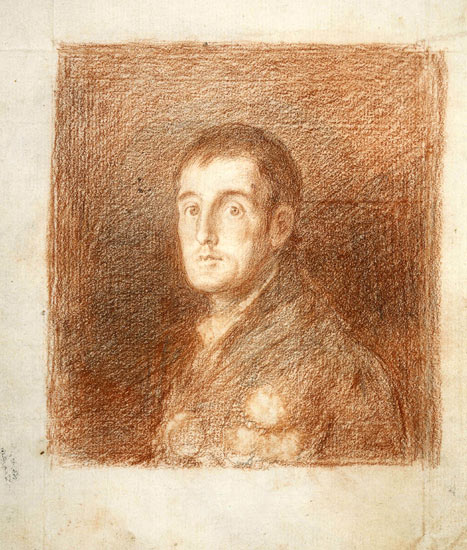
The Duke of Wellington as drawn by Francisco de Goya View larger picture
The Duke of Wellington as drawn by Francisco de Goya, on display at the exhibtion in the British Museum. Photograph: British Museum

The Iron Duke looks distinctly rusty in Francisco de Goya's superb drawing, faithfully recording the Duke of Wellington's haggard and exhausted appearance after the victory over the French at Salamanca in July 1812, towards the end of the peninsular war.

The drawing is one of the stars of an exhibition at the British Museum of some of its least known treasures – centuries of Spanish drawings and prints, most of which have never been exhibited or even seen, since they came into the collection.

"There is an impression that the Spanish weren't very interested in drawings or prints, and that Goya simply explodes on the scene from nowhere," curator Mark McDonald said. "As this exhibition shows, on the contrary they were producing works of the very highest quality."

McDonald trawled through the entire Spanish collection for the exhibition, hundreds of drawings and thousands of prints, indentifying many artists of works catalogued as anonymous, or tracing paintings the drawings related to. Some, including a beautiful 16th century study by Alonso Berruguete for a sculpture of the Virgin, are the only record of works which have since been destroyed.
Although many of the artists are now little known, a few are internationally famous, including Goya and two of a handful of surviving drawings by Velazquez.

Goya's drawing of Wellington was the basis of several more formal portraits, including one in the National Gallery recovered in 1961 after it was stolen, days after the museum acquired it, by a thief who got in through a toilet window.

The paintings all show a more conventionally noble figure than the exhausted soldier in the sketch: "Face to face with the man, Goya drew the truth," McDonald said.

mardi 18 septembre 2012

vendredi 14 septembre 2012

My Night as a Billionaire

Bendik Kaltenborn
This summer, a case of mistaken identity earned me a seat at a formal dinner at the Metropolitan Museum of Art.
The invitation — to an intimate evening with the museum’s president — was addressed to a good friend of mine. It certainly seemed like an extravagant perk, but his $100 membership renewal was coming due. Maybe times were tough, he reasoned, and the museum was rolling out the red carpet to keep even its smallest contributors. He replied that he would be delighted to attend. But there was another name on the invitation, one he didn’t recognize. Could he bring someone else — his friend Jon Methven — instead? Of course he could; the Met sent a confirmation on official museum letterhead.
Only later did we put two and two together, and realize that the other person on the invitation was a famous billionaire, whose partner happened to have the exact same name as my friend.
Ethically, it was a gray area. The Met thought we were moguls, contemplating investing our fortunes into new wings. My friend may have been a member, but I had never set foot in the museum before. And yet, the pleasure of our company had been requested. We were guilty only of not correcting the museum’s mistake, an alibi we intended to cling to if museum security dragged us screaming from the building.
The night of the event, we put on our best suits and hoped it did not come to that.
“Do I look like a billionaire?” I asked my wife.
“Well … you look a little like a millionaire,” she said.

The way we saw it there were three possible outcomes to the night:
One, we could show up at the door and the authorities would be waiting, Met security having figured out the mistake in advance and issuing us a stiff talking-to about how fraud was handled in the art world.
Two, the intended guest and his billionaire partner could also have gotten an invitation, and they would show up first. My friend’s name would be crossed off the list by the time we arrived, and we would have to explain our awkward selves. All four of us could not stay; a duel might ensue, and public support would not be in our corner.
Three, we could make it through the cocktail hour undetected. Even if someone recognized that a mistake had been made, we figured they couldn’t throw us out at that point, not in front of all the other guests.

We arrived at the museum feeling a bit paranoid and were told it would be just a few moments until someone escorted us to the roof. Wasn’t that what they always told fleeing criminals at the airline check-in? “It’ll be just a few moments,” while the cops are surrounding the building and barricading escape routes and the helicopters are jockeying for the best camera angle. But true to their word, an escort arrived and showed us to the elevator. We were in.
The plan was to mingle. At any time, if someone had pointed me at a sculpture or painting and asked for my impression, I probably would have run whimpering from the building. But I had to fake it: the quicker we latched on to a group of art aficionados, the quicker we would be considered family.
RELATED
More From Townies
Read previous contributions to this series.
I stumbled a few times, killing one conversation by admitting I didn’t know who Ellsworth Kelly was (answer: a famous minimalist artist seated a few tables over, next to the singer/songwriter Judy Collins, whose novels, I later announced, I “loved,” having mixed her up with Jackie Collins, the romance writer, whom I’d never read anyway). One couple, possibly sensing I did not fit in, inquired how I found myself at such an event. I fumbled my lines and sort of waved a hand in the direction of the other guests, as if to say, “oh you know, how do any of us find ourselves anywhere?”
And after a bit too much wine, I confessed the whole sordid caper to a woman at my table, mostly because she seemed too nice to deceive.
In the end, it wasn’t the evening I’d expected. The guests weren’t stuffy or proper, but pleasant and passionate about the museum. The museum’s president, who I’m pretty sure had met the intended invitees before and knew we were impostors as soon as she saw us, welcomed us nonetheless and encouraged us to wander the museum after dinner. The chef who performed artistry on the beet salad is destined for culinary greatness. And a security guard, who doubled as an art historian, patiently explained an exhibit as he guided us to the exit. Most of all, walking through the empty museum at night, all those priceless sculptures and paintings looking down on us as we passed, was one of those beautiful moments you want to hang on a wall forever.
So if you’re ever mistaken for a billionaire and invited to the Met for dinner, I highly recommend accepting. And if, someday, I earn enough money, even though no one asked for it, I’m going to build that museum a new wing.